Professor Hsiao Ching-Jui / National Cheng Kung UniversityProfessor of History
Zhao Zhan'ao is one of the most representative and important painters of the "Modern Ink Movement" that emerged in Taiwan in the 1960s; however, defining Zhao Zhan'ao merely as an "ink painter" is clearly an incomplete statement, as he has also constructed profound achievements in oil painting that blend Eastern and Western artistic characteristics, making him an important artist not to be overlooked.
The modern ink movement in Taiwan, which began in the late 1950s and reached its peak in the 1960s, is a significant turning point in the history of post-war Taiwanese art development. It ended the previous emphasis on realistic representation and visual simulation in creative thinking. Against the backdrop of martial law at the time, it centered on "abstraction" and used "ink" as a medium, advocating for a revolutionary goal in art that was both "modern" and "Chinese." This movement produced a wealth of talent and outstanding works, creating a vibrant scene with far-reaching influence.
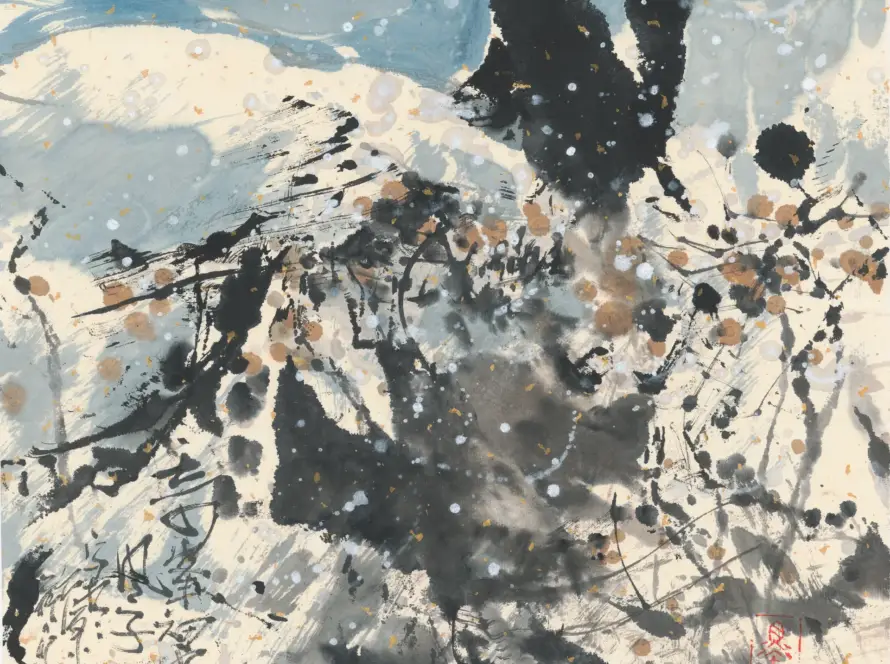
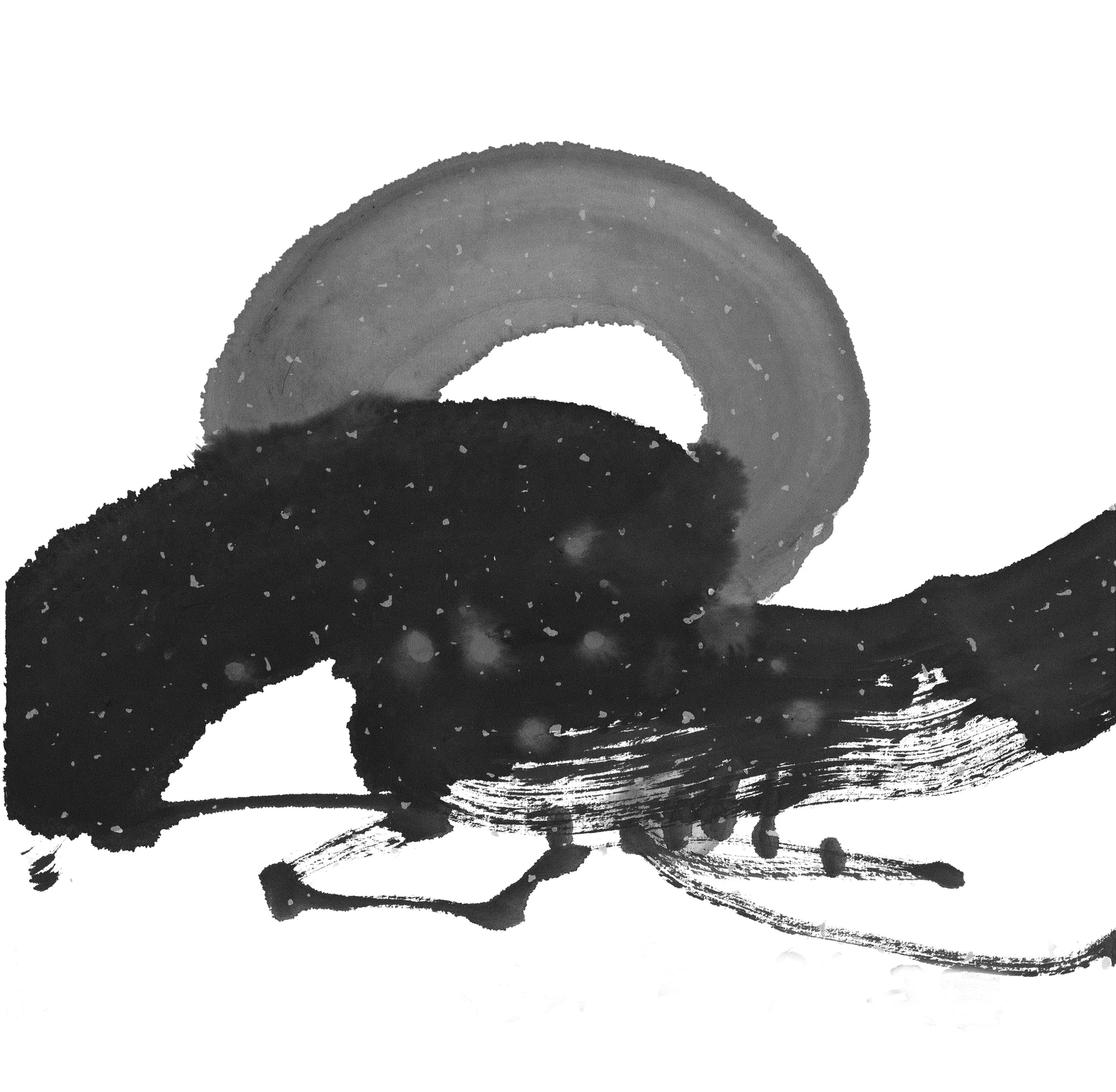
The rich and legendary life experiences of Zhao Zhan'ao have become an inexhaustible source of inspiration for his creations. In his ink works, he sometimes embodies the momentum of a sudden storm, sometimes the desolation of fallen leaves in the cold, and sometimes the resilience of a steadfast boulder or forest... Zhao Zhan'ao skillfully uses square dimensions to challenge the difficulty of creating a composition that is full yet not congested, square yet not monotonous, flowing yet not chaotic; and in the interplay of ink tones and colors, he showcases the steadfastness of life and the transcendence of the soul. In his early works, he primarily used ochre and blue, but after 2000, he raised the brightness of ochre and incorporated more red; in his later works, orange-red appeared, and the subjects included bright floral imagery, especially close to the expression of ink lotus. This transformation is naturally related to the political changes across the strait at that time, allowing him to return to his hometown in Shandong during the most beautiful nearly 30 years of spring and blooming across the strait, living and creating back and forth between Qingdao and Taiwan like a migratory bird, becoming the happiest, most stable, and creatively rich and mature period of his life.
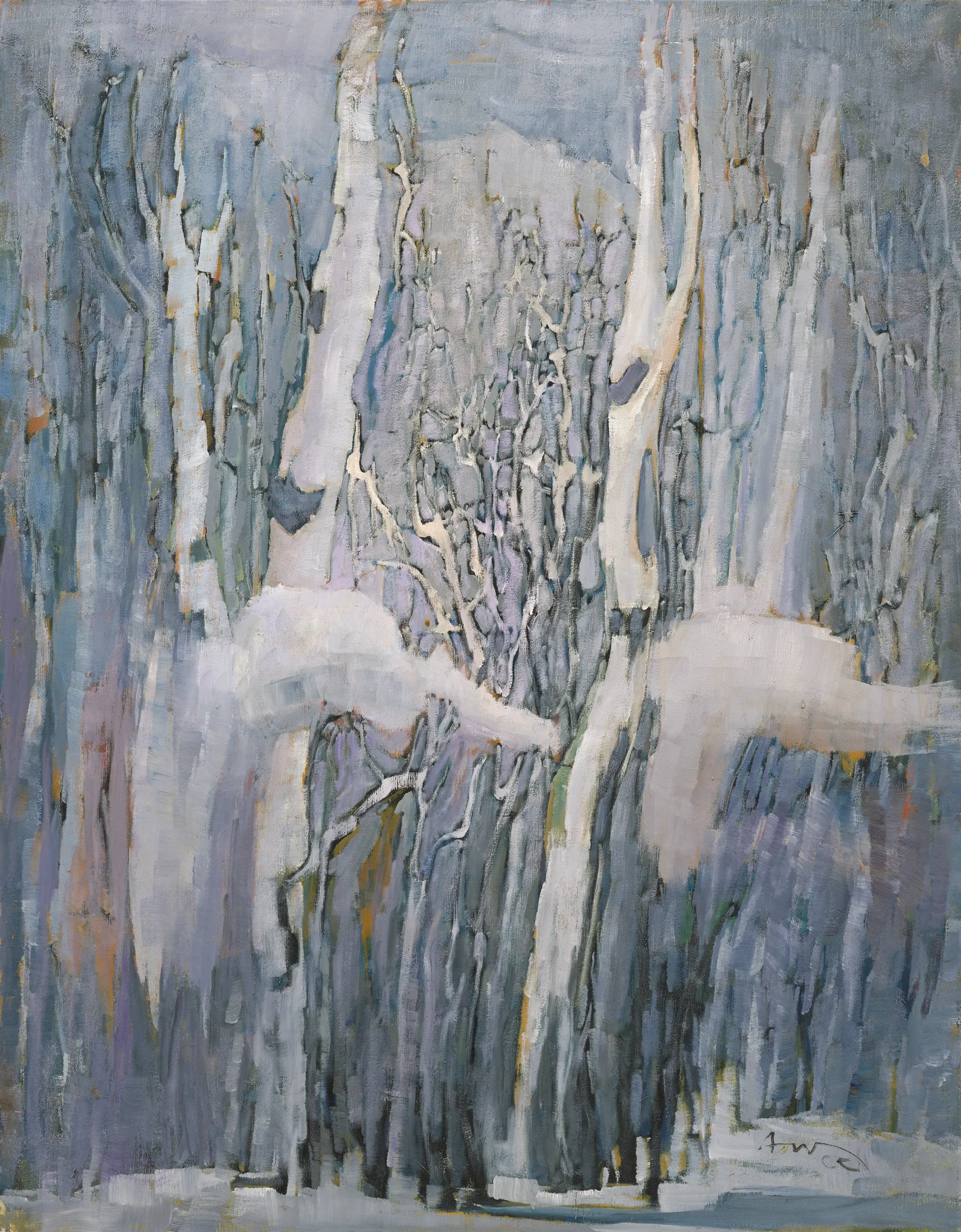
Beyond ink, the achievements in oil painting are also one of the factors that cannot be overlooked in Zhao Zhan'ao's work. Oil paint, as a medium for Chinese artists, was first introduced by Western missionaries during the Ming and Qing dynasties, with the famous court painter Lang Shining (1688-1766) as a representative. Following the large number of painters studying abroad after the founding of the Republic, "the nationalization of oil painting" became an important topic; Xu Beihong (1895-1953) started with themes from ancient Chinese history, while Lin Fengmian (1900-1991) used characters from national drama as his subjects. They were among the earliest artists to study oil painting in France, but both later returned to ink media for their creations, indicating that the nationalization of oil painting was still a challenging issue at that time.
Zhao Zhan'ao was born in a different generation from Xu and Lin, but more importantly, he was a student of Lin Kegong, who studied in England at the same time as Xu and Lin. The concepts of oil painting he learned are also strongly connected to the modernism that emphasized "flat composition" after Cézanne. Moreover, the Taipei Rixin Gang Political Work School that Zhao Zhan'ao attended was the earliest institution where Taiwan's "modern painting mentor" Li Zhongsheng (1912-1984) taught. Although Li Zhongsheng moved south to Changhua in 1955, his thoughts and influence remained with some of his early students, who were also Zhao Zhan'ao's seniors, such as Jiao Shitai (1929-), Jin Zhefou (1929-2019), and others; furthermore, through military publications at the time, such as "Light of Victory" and "New Literature and Art," his influence expanded. Therefore, it is quite natural that Zhao Zhan'ao was enlightened by these seniors and publications, learning and understanding the claims and connotations of modern art.
As for the difference between "modern art" and "traditional art," the biggest distinction lies in the attitude towards the treatment of "objects." "Traditional art" emphasizes realism in depicting objects, especially based on the two fundamental techniques of "perspective" and "gradation"; whereas "modern art," starting from Cézanne's "Cubism," breaks away from these two "assumptions" and "illusions," returning to the two-dimensional essence of "flatness," and utilizes the inherent brightness and chroma of colors, juxtaposing them to create a real sense of "space."
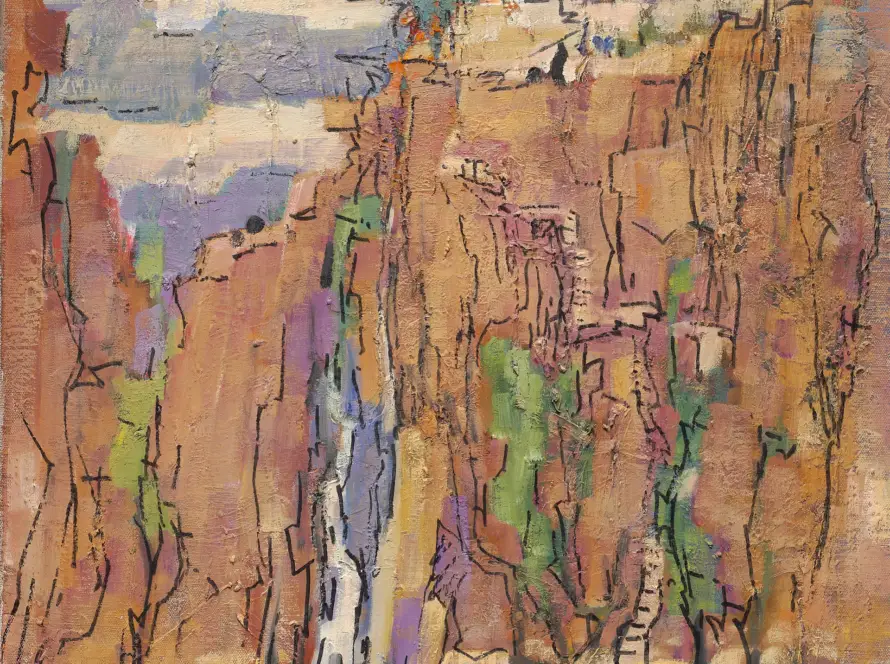
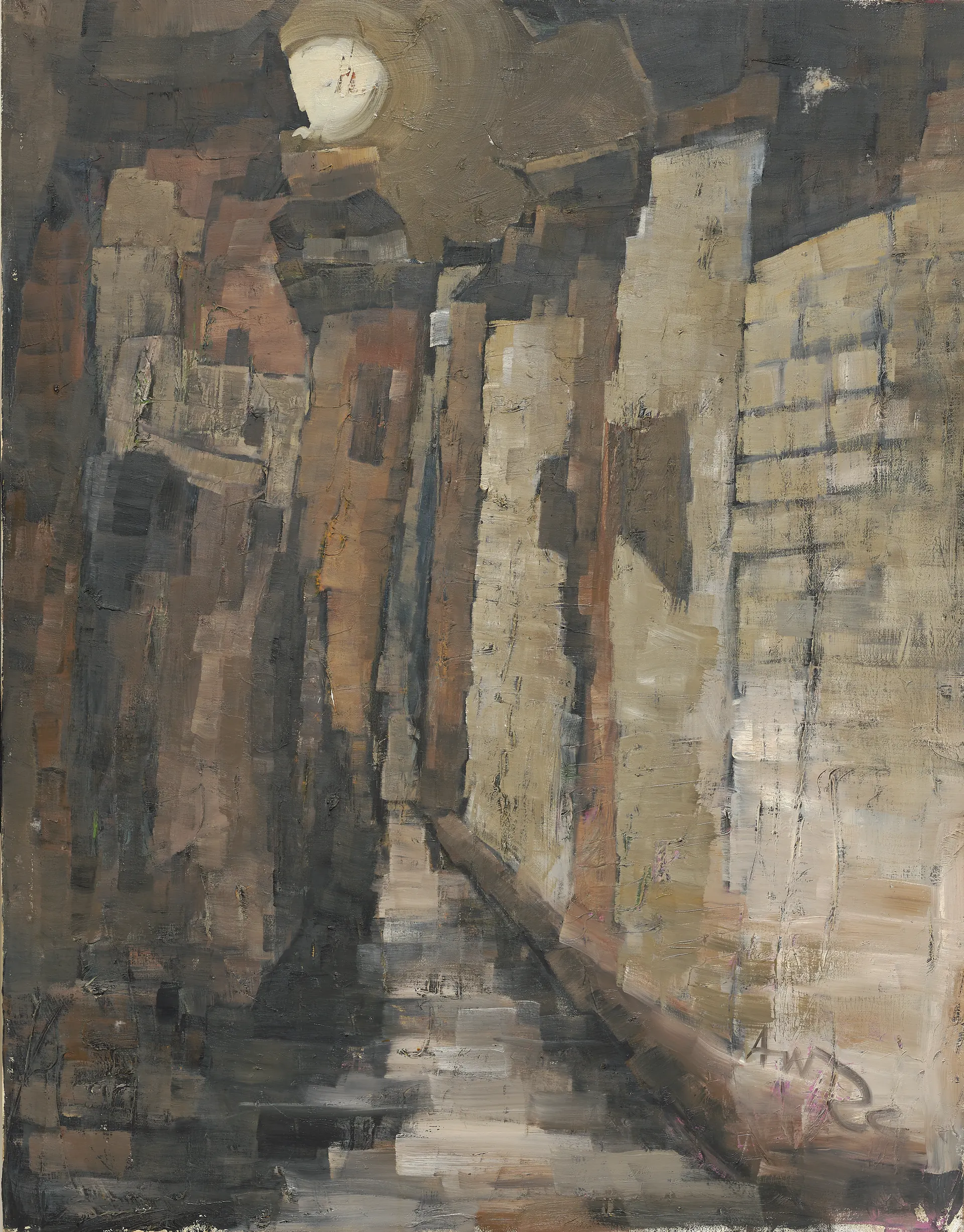
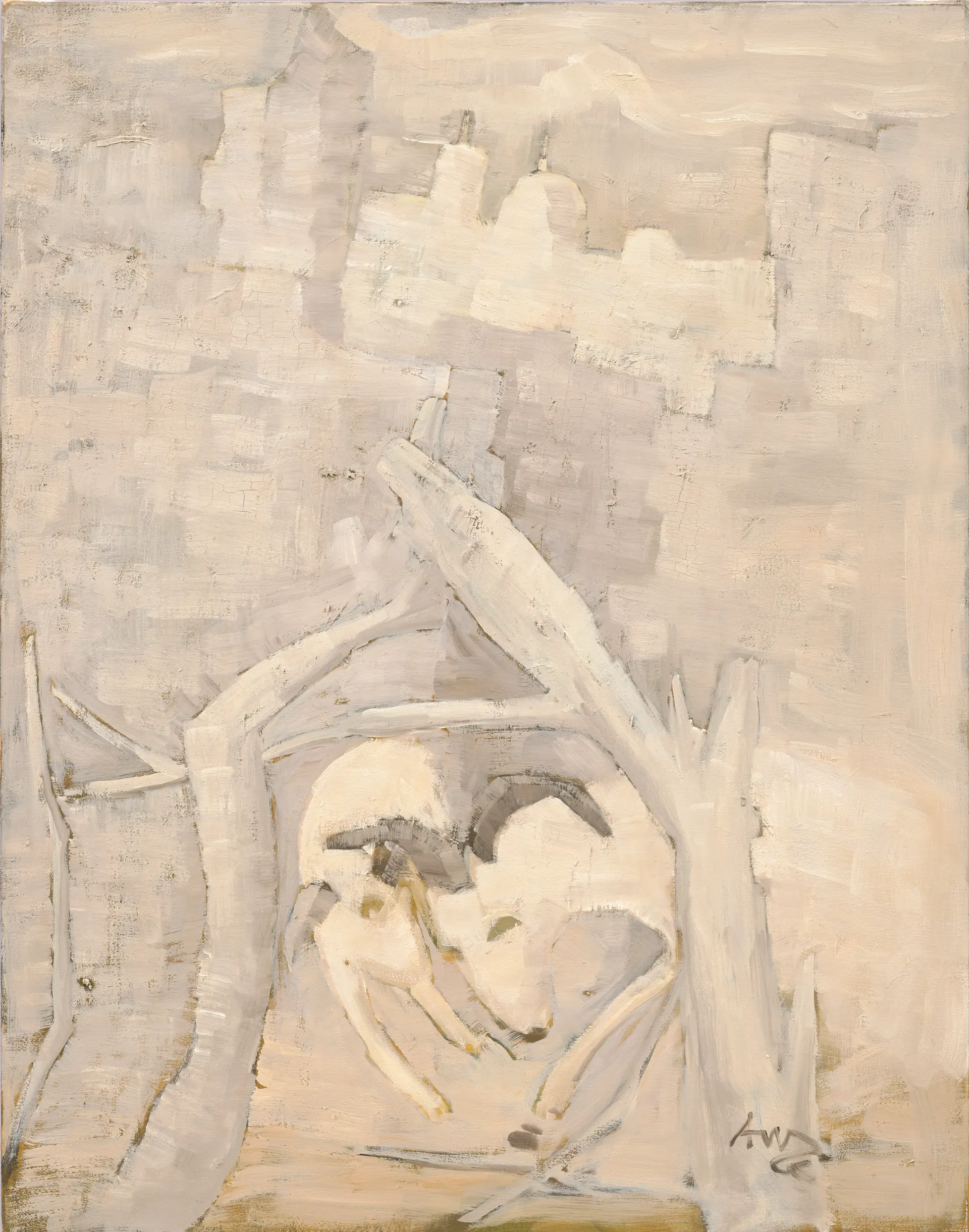
This artistic claim of "anti-perspective" and "flattening," even adding the factor of "time," is almost in line with the traditional Chinese painting concepts. Looking back at Zhao Zhan'ao's oil paintings, they indeed exhibit the aforementioned characteristics. The existing oil paintings by Zhao Zhan'ao that can be dated are almost all from after 2000, and his expressive techniques include lines and surfaces, yet they are distinctly different from the works of early Cubist artists, including Cézanne and Pablo Ruiz Picasso (1881-1973). If we were to find a closer counterpart among modern Chinese artists, Wu Guanzhong (1919-2010) might be the one; however, Wu Guanzhong's works tend to be more romantic and spontaneous, while Zhao Zhan'ao's oil paintings exhibit a more solid and profound texture and connotation.
Zhao Zhan'ao's oil paintings exhibit a more solid and profound texture and connotation.
More details
About Chan-Ao Chao
Chronology
Artistic Positioning
Press